
At the time of writing – January 2026, there seems to be a lot of traction on social media regarding the January 2022 revisions to the Highway Code and the hierarchy of road users.
Without going into detail, those most vulnerable road users have priority, particularly at junctions. The changes, slight though they are, do not give pedestrians carte blanche to leap into the carriageway but they do allocate priority and clarify which rules of the Highway Code road users must or should comply with and it is this that seems to have been thoroughly misunderstood by an awful lot of allegedly competent motorists.
Let’s take a look at what is meant by should and must.
The Highway Code attempts to clarify the difference between those rules that are MUST and SHOULD as follows;
Many of the rules in the Code are legal requirements, and if you disobey these rules you are committing a criminal offence. You may be fined, given penalty points on your licence or be disqualified from driving. In the most serious cases you may be sent to prison. Such rules are identified by the use of the words ‘MUST/MUST NOT’.
Although failure to comply with the other rules of the Code will not, in itself, cause a person to be prosecuted, The Highway Code may be used in evidence in any court proceedings under the Traffic Acts to establish liability. This includes rules which use advisory wording such as ‘SHOULD/SHOULD NOT’ or ‘DO/DO NOT’.
The use of the word advisory has been taken by many as a synonym for optional – which it is not.
MUST and SHOULD do not determine the severity of an offence but merely that someone breaking a MUST rule is committing an offence at law and is opening themselves up for prosecution for that specific offence.
Someone breaking a SHOULD rule is not committing an offence by breaking that rule.
So, for example, ALL road users MUST stop at a red traffic light but also ALL bicycles MUST be fitted with amber pedal reflectors.
Now, I don’t have all the information to hand but I would dance naked on top of a grand piano if anyone, anywhere, has ever been prosecuted for not having amber pedal reflectors on their bicycle.
So, MUST rules are not more serious rules or more important rules.
However, this is the rule that appears to confuse people;
Rule H2 – Rule for drivers, motorcyclists, horse drawn vehicles, horse riders and cyclists
At a junction you SHOULD give way to pedestrians crossing or waiting to cross a road into which or from which you are turning.
You SHOULD give way to pedestrians waiting to cross a zebra crossing, and to pedestrians and cyclists waiting to cross a parallel crossing.
You MUST give way to pedestrians on a zebra crossing, and to pedestrians and cyclists on a parallel crossing.
What is clear from this rule is that pedestrians crossing or waiting to cross a road and pedestrians waiting to cross a zebra crossing are covered by the same SHOULD.
There is effectively no difference. A pedestrian stood waiting to cross a junction should be treated exactly the same as if they were stood waiting to cross a zebra crossing.
However, if they’re actually on a crossing then other road users must stop and to not do so would open them up to prosecution under a specific law.
Now, Rule H2 is not the best example to use for this illustration because very few pedestrians are in a position to record an incident. The odds of a motorist being reported for not stopping to let a pedestrian cross a road junction are very slim indeed.
There would need to be a collision, maybe witnesses and a search for cctv and doorbell cameras and such like.
How about rule H3 – is that any clearer?
Rule H3 – Rule for drivers and motorcyclists
You SHOULD not cut across cyclists, horse riders or horse drawn vehicles going ahead when you are turning into or out of a junction or changing direction or lane, just as you would not turn across the path of another motor vehicle. This applies whether they are using a cycle lane, a cycle track, or riding ahead on the road and you should give way to them.
Do not turn at a junction if to do so would cause the cyclist, horse rider or horse drawn vehicle going straight ahead to stop or swerve.
I think that’s a little clearer. A cyclist, like a pedestrian, has priority when crossing a junction whether they’re on the road or a cycle path.
Whether clearer or not it does add one new variable; a great many cyclists carry cameras so any incident is far more likely to be recorded than that for a pedestrian.
To sum up, it’s easier to look at an entirely different rule that is used in a great many incidents.
Here’s rule 163 and its use should become obvious.
Rule 163
Overtake only when it is safe and legal to do so. You SHOULD;
Give motorcyclists, cyclists and horse riders and horse drawn vehicles at least as much room as you would when overtaking a car.
As a guide:
Leave at least 1.5 metres when overtaking cyclists at speeds of up to 30mph, and give them more space when overtaking at higher speeds.
Pass horse riders and horse-drawn vehicles at speeds under 10 mph and allow at least 2 metres of space.
Allow at least 2 metres of space and keep to a low speed when passing a pedestrian who is walking in the road (for example, where there is no pavement).
Take extra care and give more space when overtaking motorcyclists, cyclists, horse riders, horse drawn vehicles and pedestrians in bad weather (including high winds) and at night.
You should wait behind the motorcyclist, cyclist, horse rider, horse drawn vehicle or pedestrian and not overtake if it is unsafe or not possible to meet these clearances.
This is a SHOULD rule. Is it really just advice? Is it really optional?
If we look at a real-life example.
This driver didn’t give the cyclist 1.5 metres when overtaking. Maybe they thought the rule was optional.
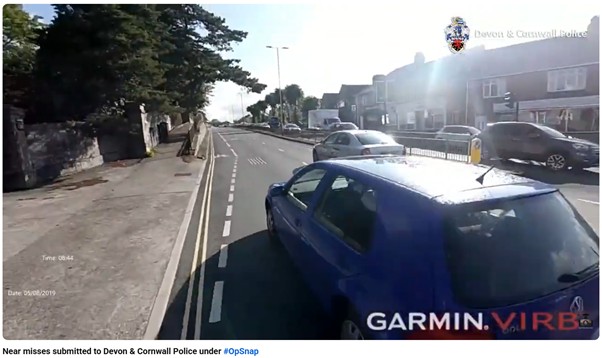
However, they were prosecuted for driving without due care and attention, fined and their licence endorsed.
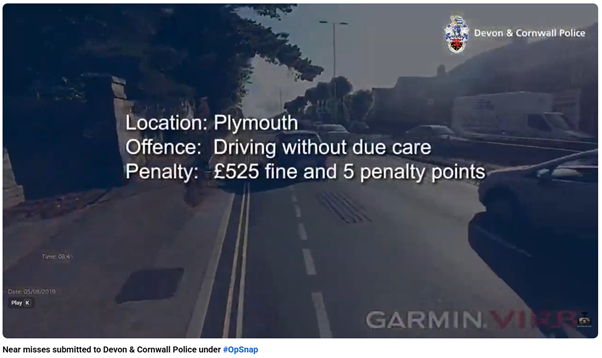
And this is the entire point of this post.
SHOULD rules simply mean that ignoring them gets you prosecuted for an entirely different rule.
There is no MUST rule that you MUST give cyclists 1.5m clearance. On some roads it might be safe to pass a cyclist with a very small clearance providing that the cyclist is happy with it.
However, pass poorly and be recorded and there’ll be a letter in the post.
Enter or exit a junction poorly and be recorded and there also might be a letter in the post.
And finally, always remember this rule. It’s like an inverse ‘get out of jail free’ rule – a big fat MUST and always there to catch the unwary.
Rule 144
You MUST NOT
drive dangerously
drive without due care and attention
drive without reasonable consideration for other road users.
 The Reluctant Wanderer...
A great piece. Thank you!
LikeLike